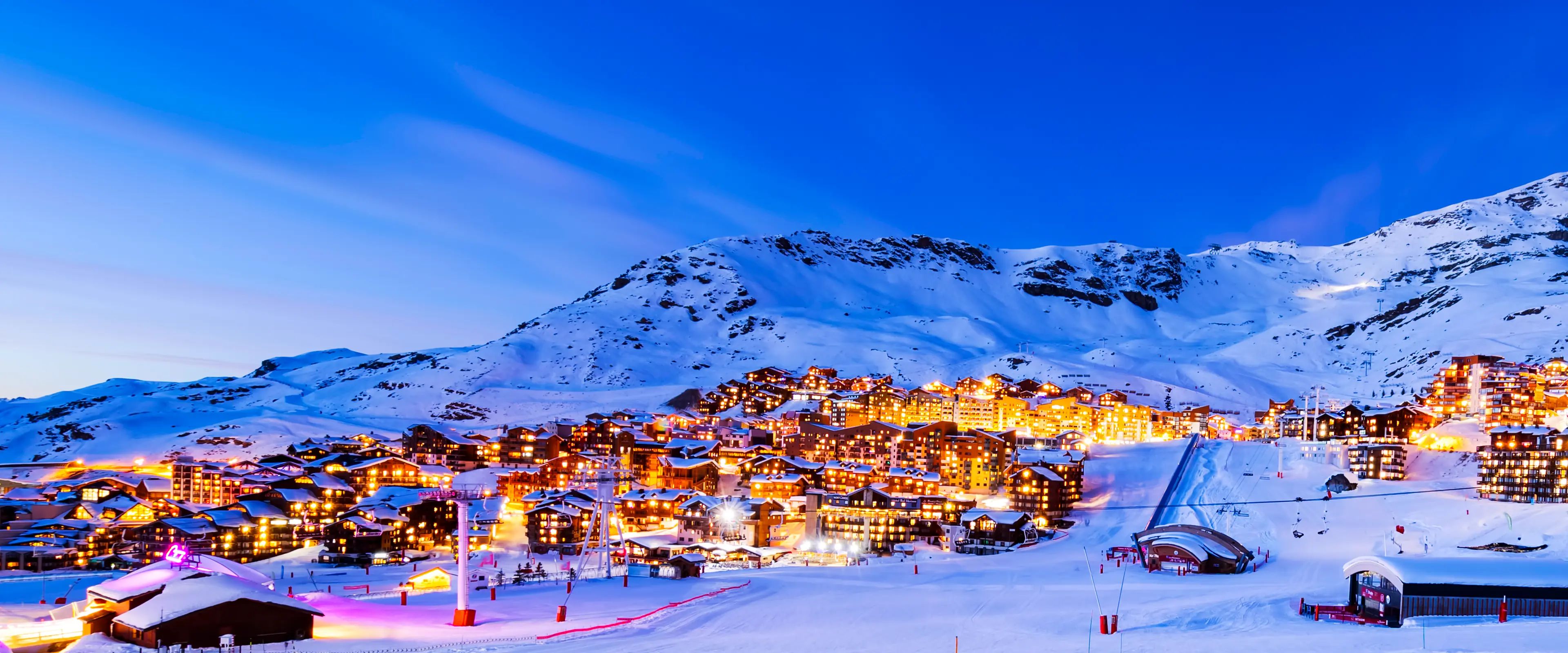
Val Thorens
Europe's highest ski resort, in the largest ever ski area, and with one of the longest and most reliable seasons around.
This Val Thorens guide is brought to you by your brand. Sponsored pages keep our editorial format, carry your logo and colours, and link straight to your booking engine for the whole season.
Book Val Thorens with usWhat to expect at Val Thorens
Val Thorens is the highest resort in Europe, and the numbers do the talking: a village at 2,300 m, lift-served skiing to 3,230 m, and a season that reliably opens in November and closes in early May. The mountain sits on a horseshoe of north-facing bowls above the tree line, so cover stays cold and dry when neighbouring valleys turn to slush. From the top of the Cime Caron cable car you can drop into three separate valleys and, via a chain of gondolas, cover the full 600 km Trois Vallées network in a single day. The village itself is unabashedly purpose-built, concrete blocks stepped into the hillside, but every one of them is ski-in ski-out, and after 4pm La Folie Douce takes over.
Val Thorens on film
Skiing and staying in Val Thorens
Val Thorens Overview
Val Thorens, Europe's highest ski resort at 2,300m, offers a remarkable skiing experience with exceptional snow reliability from late November to early May. As part of the vast Three Valleys ski area, a pass provides access to 600km of interconnected pistes, though Val Thorens' own 150km of slopes are more than sufficient for a full week's holiday.
The resort is situated above the tree line, presenting expansive, sun-drenched bowls and spectacular views. This modern, purpose-built village provides almost ubiquitous ski-in/ski-out access and is known for its vibrant après-ski scene. With a diverse range of terrain, from steep black runs to gentle blue cruisers and the iconic Cime de Caron cable car, Val Thorens appeals strongly to intermediate and advanced skiers, while beginners benefit from dedicated slopes right in the village centre.
Skiing and Snowboarding
Val Thorens caters to all abilities, whether you're a novice finding your feet, an intermediate aiming to cover significant distances, or an expert seeking powder in the Combe de Caron. The resort boasts 78 pistes and a 930m vertical drop. Its north-facing slopes ensure consistent snow quality throughout the season, making it a reliable choice for skiers and snowboarders.
Beginners can enjoy a dedicated area in the resort's heart, complete with free drag lifts and gentle gradients for easy progression. Green runs, such as Plein Sud, offer longer descents with mellow terrain and scenic views, while the high altitude ensures soft, forgiving snow perfect for learning. The resort's Famille Plus accreditation highlights its family-friendly focus, with ski schools like Prosneige accepting children from two years old.
Intermediate and Advanced Terrain
Intermediate skiers will find Val Thorens particularly rewarding. The resort's blue and red runs are consistently groomed and notably long, allowing for extensive practice without repetition. Areas like 2 Lacs provide sweeping blue runs with stunning vistas, and descents from Col de la Chambre offer a satisfying sense of achievement. For those ready to advance, the black runs around Cime de Caron are challenging yet manageable for confident intermediates.
Advanced and expert skiers have access to thrilling terrain, including twisting red runs, high-speed descents, and challenging black slopes. The Cime de Caron cable car transports skiers to 3,200m, where north-facing couloirs often retain powder for days after a snowfall, presenting steep, sustained pitches. Expert skiers can also explore Val Thorens' itinerary routes, which are marked but ungroomed, leading through gullies and rocky terrain. The off-piste opportunities are extensive, with classic descents like Col de Thorens and the wilder areas towards Orelle, alongside high-alpine adventures on the Glacier de Chavière.
Resort Highlights
Val Thorens is renowned as one of the Alps' premier après-ski destinations, with a legendary scene often considered among Europe's best. Festivities begin at La Folie Douce before the lifts close, continuing into the night at bars along the main strip. The resort attracts a dynamic, younger crowd, with nightclubs open until the early hours. Quieter venues are also available for those preferring a more relaxed evening. The resort's high altitude at 2,300m, reaching 3,230m at the Cime de Caron, guarantees excellent snow reliability but newcomers should take it easy and stay hydrated initially. On clear days, the views from the summit extend across four countries.
Val Thorens in winter
Val Thorens piste map
The official Val Thorens piste map showing every run, lift and sector. Zoom in for detail or open it full screen.
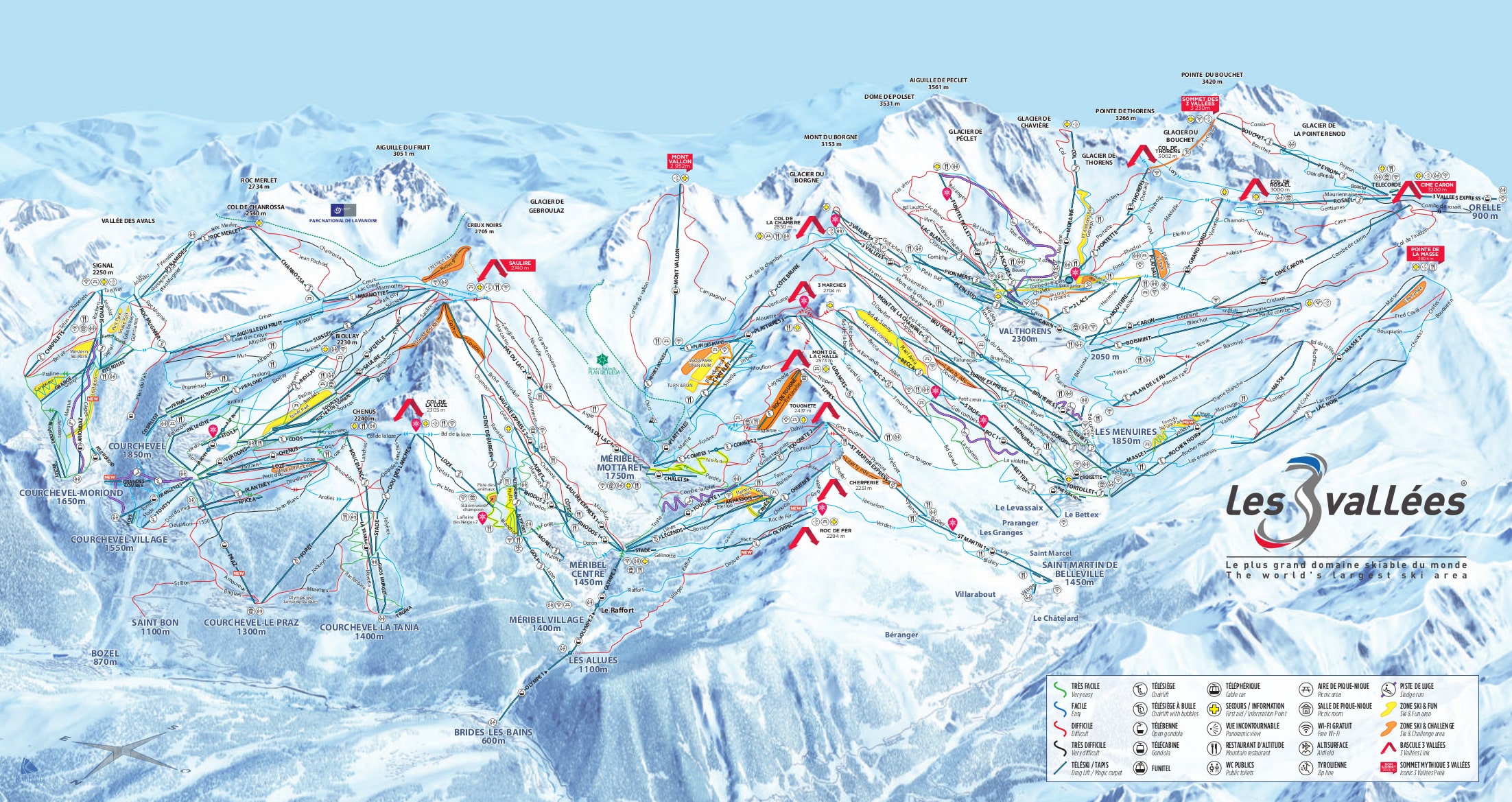
Scroll or pinch to zoom, drag to pan.
View and download Val Thorens ski map ↗Getting to Val Thorens
- Grenoble Airport (GNB)2 h 30 min
- Lyon Airport (LYS)2 h 30 min
- Geneva Airport (GVA)3 h
- Chambery Airport (CMF)3 h
Drive times are estimates based on typical winter road conditions. Book transfers in advance during peak Saturday changeovers.
Val Thorens FAQs
- Is Val Thorens suitable for beginners?
- Yes, Val Thorens is well-suited for beginners. Free beginner lifts and gentle nursery slopes are conveniently located in the village centre, allowing learning without immediate ski pass costs. Progression to green and blue runs is straightforward once confidence grows. Reliable snow conditions ensure pistes remain in good shape, with softer snow being more forgiving for learners. The resort's Famille Plus accreditation highlights its family focus, and ski schools such as Prosneige welcome children from two years of age.
- Can you ski from Val Thorens to Méribel and Courchevel?
- Absolutely, this is a key advantage of Val Thorens. With a Three Valleys ski pass, it is possible to ski to Méribel and then on to Courchevel within a single day. Connections are clearly marked and efficient, though confident intermediate ability is recommended for comfortable travel. Always allow ample time for the return journey, as the last lifts back operate strictly to schedule.
- When is the best time to ski Val Thorens?
- Val Thorens benefits from its high altitude, offering excellent snow from late November through to early May. The glacier and north-facing slopes maintain good conditions, even into spring. However, do not assume crowd levels solely based on dates. The optimal time depends on your preferred balance of price, snow conditions, and availability.
- Is Val Thorens good for après-ski?
- Val Thorens is considered one of the Alps' top après-ski destinations, with its legendary scene often ranked among the best in Europe. La Folie Douce initiates the party before the lifts close, and bars along the main strip continue late into the night. It attracts a younger, more energetic crowd than some resorts, with nightclubs open until late. Nevertheless, quieter options are available for those preferring a more subdued evening.
- How high is Val Thorens?
- Val Thorens village is situated at 2,300m, making it Europe's highest ski resort. The skiing extends up to 3,230m at the summit of the Cime de Caron. This exceptional altitude guarantees outstanding snow reliability but may affect some visitors; it is advisable to take it easy on your first day and stay hydrated. On a clear day, the views from the summit stretch across four countries.
Resort figures are checked against official resort sources each season. Spotted something out of date? Tell us.
Nearby resorts

Les Menuires
The value entry point into the Trois Vallées with easy grooming and huge access.

Méribel
Chocolate box chalet village at the heart of the Trois Vallées. Polished, wooded, sociable.
St Martin de Belleville
Serene Savoyard village with access to 370 miles of slopes in France's Trois Vallées.